
Criminal Court Cases in Blair County
Blair County criminal cases normally begin before a magisterial district judge. That court accepts the complaint, conducts the preliminary arraignment, sets initial bail, and holds the preliminary hearing. Summary matters and traffic or non-traffic cases may remain there. A felony or misdemeanor held for court moves to the Court of Common Pleas of Blair County, Pennsylvania's 24th Judicial District. The prosecutor then files an information, which is the formal Common Pleas charging paper.
The Blair County Clerk of Courts criminal office keeps the Common Pleas file at 423 Allegheny Street, Suite 144, Hollidaysburg. The office is open from 8 a.m. to 4 p.m. on weekdays and closes from noon to 1 p.m. Its phone is 814-693-3080. The Clerk is the right custodian for docket papers, certified dispositions, pleas, orders, and sentences. Police narratives stay with the arresting agency, and prosecution work files are not substitutes for the public court file.
Blair County UJS Docket Search
The free
Unified Judicial System Case Search
covers both Blair County Common Pleas criminal dockets and
magisterial district criminal matters. A Common Pleas criminal
number usually starts with CP-07-CR. The number 07
identifies Blair. Searching that exact number is the cleanest
route; a participant-name search is useful when the number is
unknown.
The official UJS search form is shown below. It illustrates why court type and county matter as much as a name.
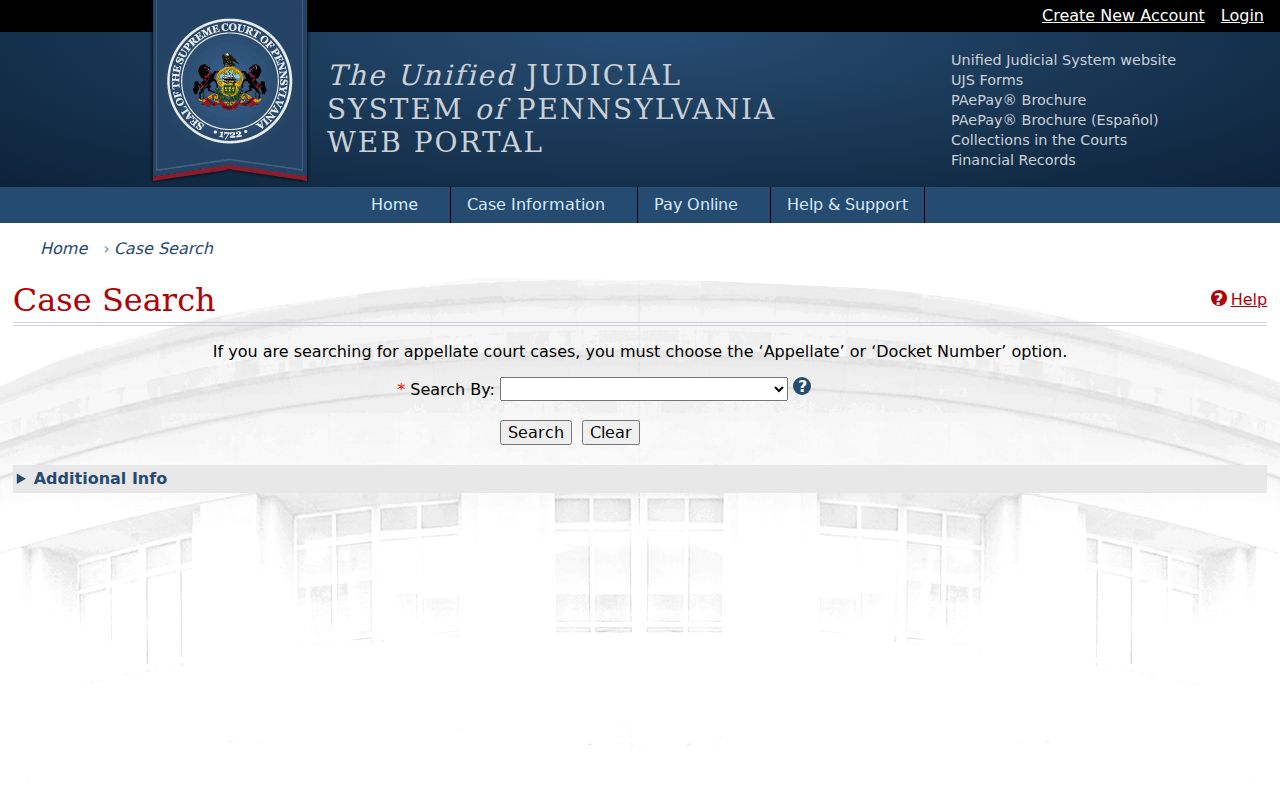
Choose Common Pleas or Magisterial District, select Blair, and narrow a broad name result with filing or docket details.
Blair County Case Record Searches
Begin online, then move to the office that holds the missing paper. Names can be shared, misspelled, or listed under an alias. Compare the court, filing date, docket number, and public identifiers before treating a result as the right person.
- Open UJS Case Search and choose Participant Name or Case Number.
- Select the correct court type and Blair County.
- Search Common Pleas and repeat the search under Magisterial District Court.
- Open the docket sheet and inspect every charge, hearing, bail, and disposition row.
- Ask the relevant MDJ or Clerk of Courts for papers and certified copies not online.
| Search field | Use | Blair detail |
|---|---|---|
| Search Type | Name, case number, incident number, organization, attorney, or event | Availability varies by court |
| Court Type | Common Pleas or Magisterial District | Search both for a full path |
| County | Limits results | Select Blair |
| Participant Name | Broad discovery | Use spelling variants |
| Docket Number | Exact retrieval | Common Pleas uses CP-07-CR format |
Suite 144 Court Record Copies
Online docket sheets are indexes, not the whole Blair County criminal case file. The Clerk counter provides older or non-online papers, certified dispositions, and written criminal background searches. A written Blair search costs $13. Computer printouts and photocopies are $0.50 per page, certification of a document or order is $9, and a certified letter is $11.
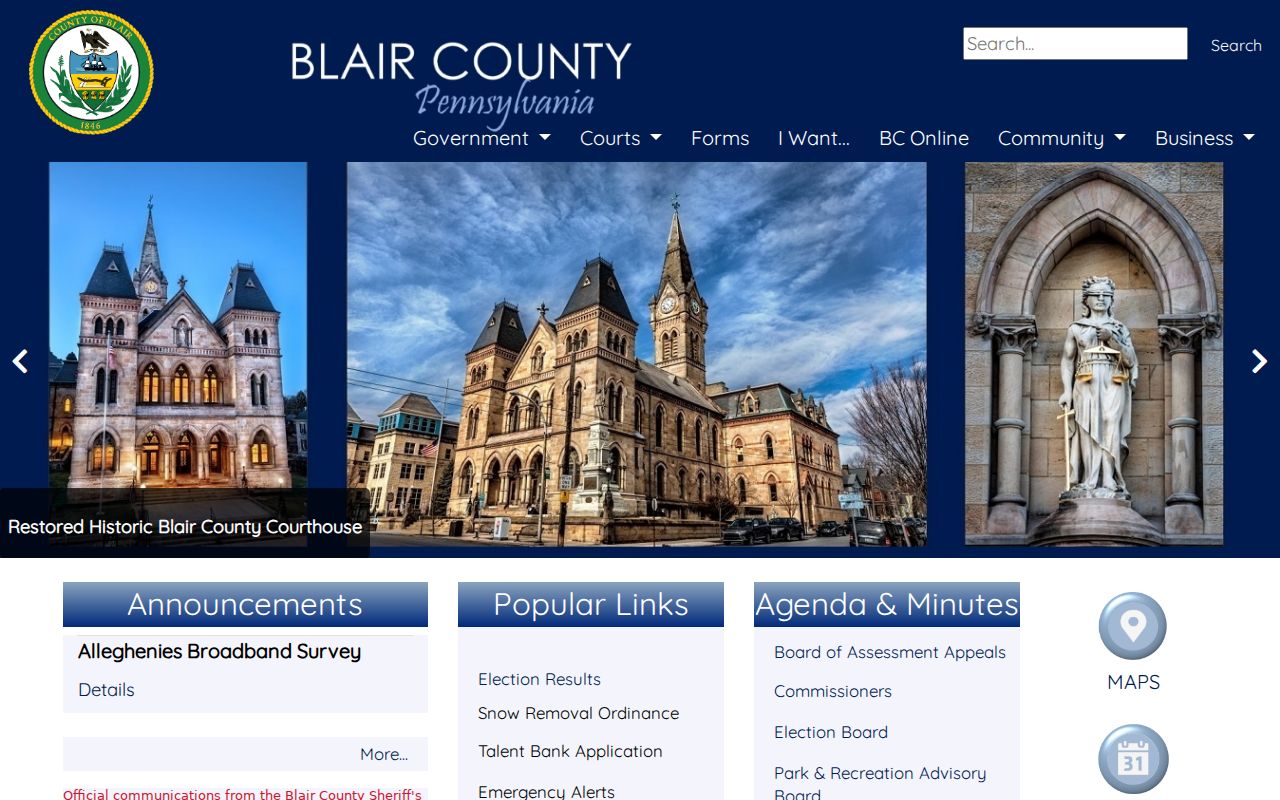
The official Blair criminal Clerk page shows the office that holds these records.
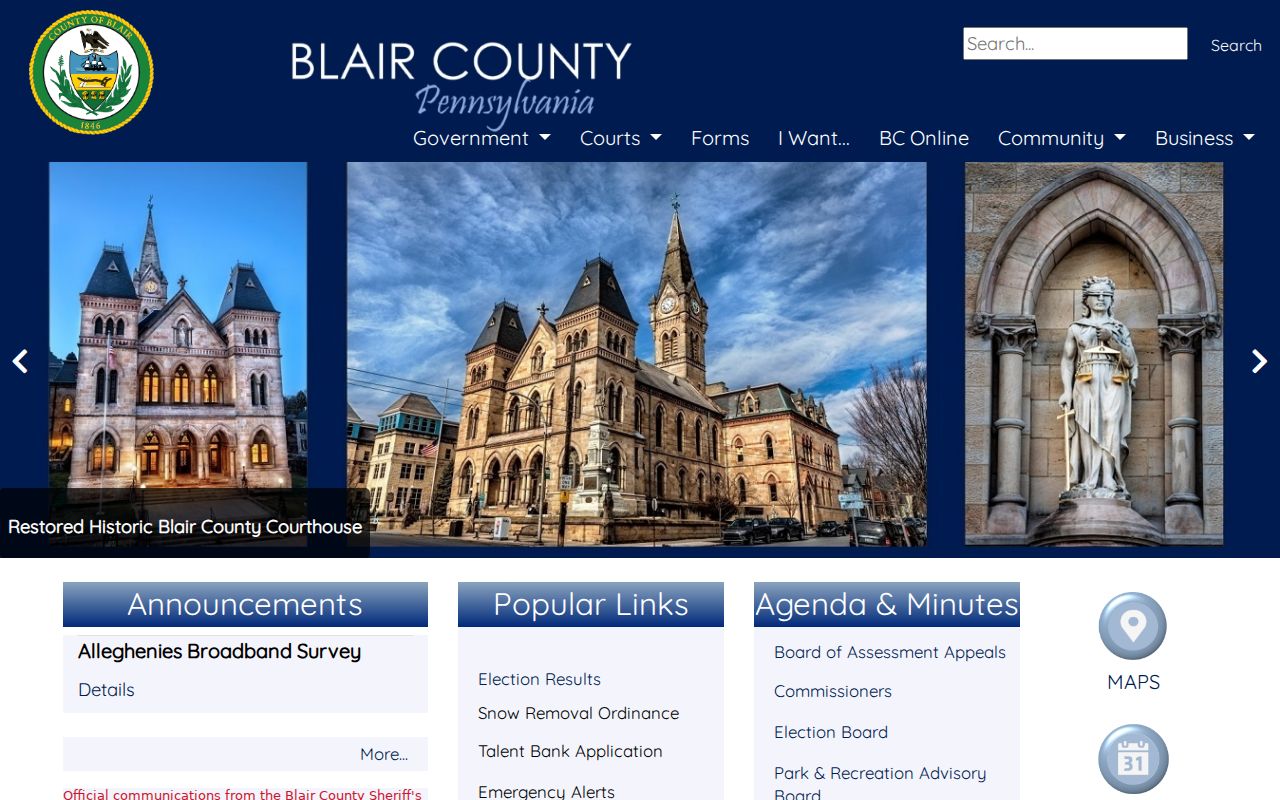
The Clerk page connects online docket research to the local counter for documents and certification.
The Clerk's official criminal fee bill is the source for those charges.
Confirm the current total before sending a request, especially when copies and certification are combined.
What a Criminal Case File Contains
A Blair County docket is chronological. It identifies the court and case, then records filings and events as the prosecution moves. Read charge sequences one by one. A case-level label may hide the fact that one count was withdrawn, another dismissed, and a third resolved by plea.
| Case number and court | Docket identifier, Blair venue, status, and filing date |
|---|---|
| Charging papers | Complaint at the MDJ level and information in Common Pleas |
| Charges | Statute, grade, sequence, and separate outcome for each count |
| Bail and hearings | Bail type, amount, status, scheduled proceedings, room, and judge |
| Parties and entries | Attorneys, prosecutor, orders, motions, and dated docket events |
| Outcome and sentence | Disposition, judgment, sentence date, terms, and financial obligations |
A downloadable sheet may also show police incident or OTN identifiers, aliases, linked appeals, and money due. Protected identifiers are limited. Sealed, expunged, and limited-access cases do not appear in public Case Search.
Read Blair County Charge Outcomes
Disposition means the result of a charge. “Nolle prosequi” means the prosecutor ended that count with court approval. An acquittal is a not-guilty result, while dismissal means the charge ended without a conviction. A plea is the defendant's response, and a sentence is the consequence imposed after guilt. These terms should never be collapsed into a single case status.
Bail is also separate from guilt. Recognizance is an unsecured promise to appear. Surety bail uses a third party or security. A bench warrant is a judge's order based on failure to appear or comply. The public docket may show when a bench warrant was issued or lifted, but entries can lag, and sealed warrants will not display. Call the issuing court or Sheriff for safe confirmation rather than acting on a screen alone.
Criminal Case Stages in Blair County
A Blair prosecution starts with an arrest or complaint. The MDJ handles preliminary arraignment and bail, then tests whether probable cause supports sending a felony or misdemeanor forward. After bind-over, the District Attorney files the information in Common Pleas. Formal arraignment and pretrial motions follow. The case may end through dismissal, diversion, plea, trial, or acquittal before sentencing and any appeal.
Case flow: Charges Filed › Arraignment › Pretrial › Plea or Trial › Disposition › Sentencing
This sequence explains why a new matter can have an MDJ docket but no CP-07-CR entry yet. It also explains why booking charges may not match the final information. Court events, not the first accusation, establish the adjudicated outcome.
Blair County Treatment Court Events
Blair County has used collaborative Drug Treatment Court and DUI Treatment Court programs involving the court, District Attorney, Public Defender, Adult Parole and Probation, and Blair Drug and Alcohol Partnerships. These are supervised specialty tracks, so the docket may contain added reviews, program events, conditions, or later orders that do not resemble a simple plea-and-sentence path.
Successful diversion can affect later expungement eligibility, but participation does not itself erase the public docket. A reader should inspect the latest order and final charge outcomes, then use the statewide court forms and Clerk process if relief is available.
The Pennsylvania public court forms index supplies expungement, limited-access, and fee-waiver forms.
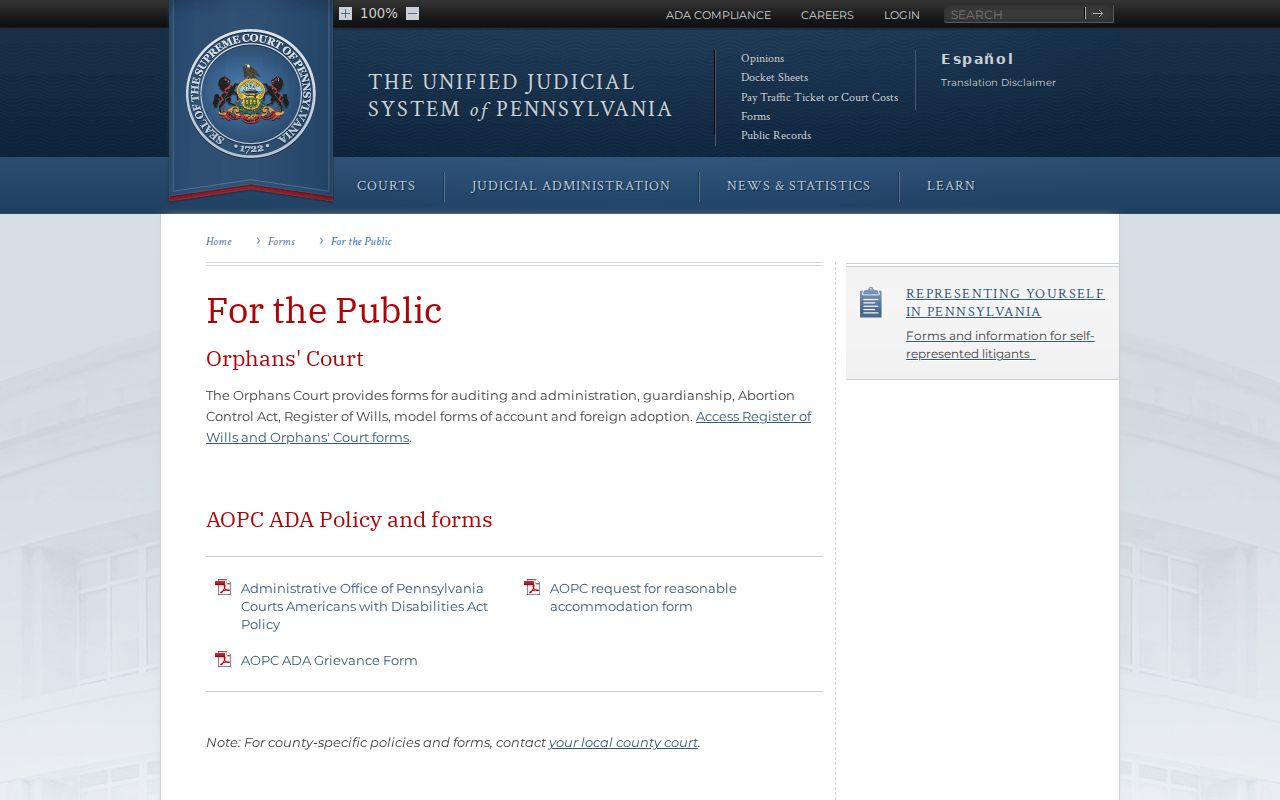
The form set is statewide, but a Blair petition is filed through the local Clerk under the correct docket and charge sequences.
Blair Magisterial District Paper Files
Initial complaints, preliminary hearings, bail rulings, and summary proceedings belong to the particular magisterial district court that handled them. UJS provides the authoritative Blair office list and direct contact data. If the online entry lacks a paper, request it from that MDJ rather than assuming the Common Pleas Clerk has it.
The UJS court case information guide explains the difference between free online case data and paper-record requests.
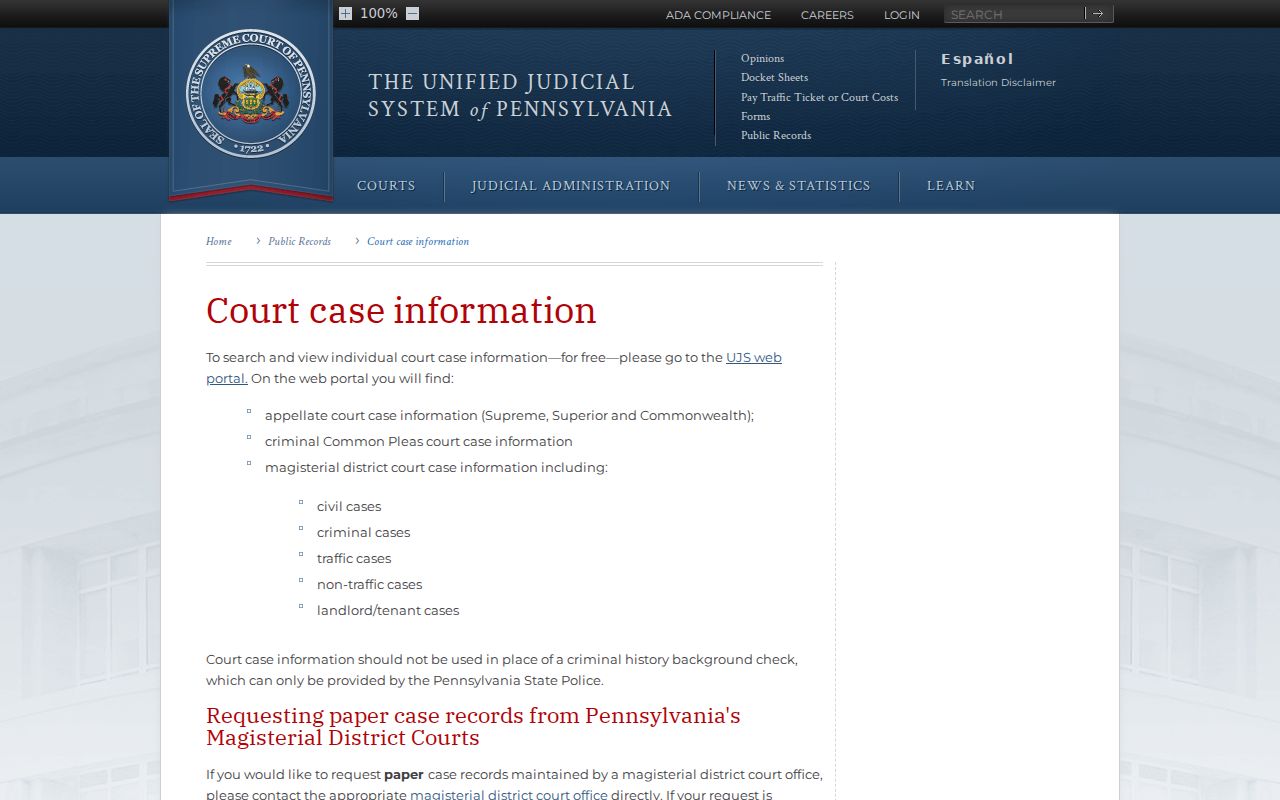
A complex request may require the UJS request form, while a focused request should name the docket, document, court, and desired format.
Access Rules for Blair Case Records
Open access has firm limits. Juvenile material, victim identifiers, confidential information, and protected personal data may be sealed, withheld, or redacted. Active investigative records remain with police and may be exempt even when a related docket is public. Judicial records also follow court policies rather than automatically falling under Blair County's general Right-to-Know process.
A missing public result does not prove that no case ever existed. Clean Slate limited access, sealing, and expungement remove qualifying cases from ordinary Case Search. If reviewing your own record, compare the public docket with a Pennsylvania State Police Access and Review record. If the issue is an absent disposition, gather the court order and use the PSP correction route under 18 Pa.C.S. §9114.
Record rule: UJS warns that Case Search is not a substitute for a Pennsylvania State Police criminal-history check.